domingo, 7 de maio de 2017

Tomar II - o lugar dos Templários./ The place of the Templars

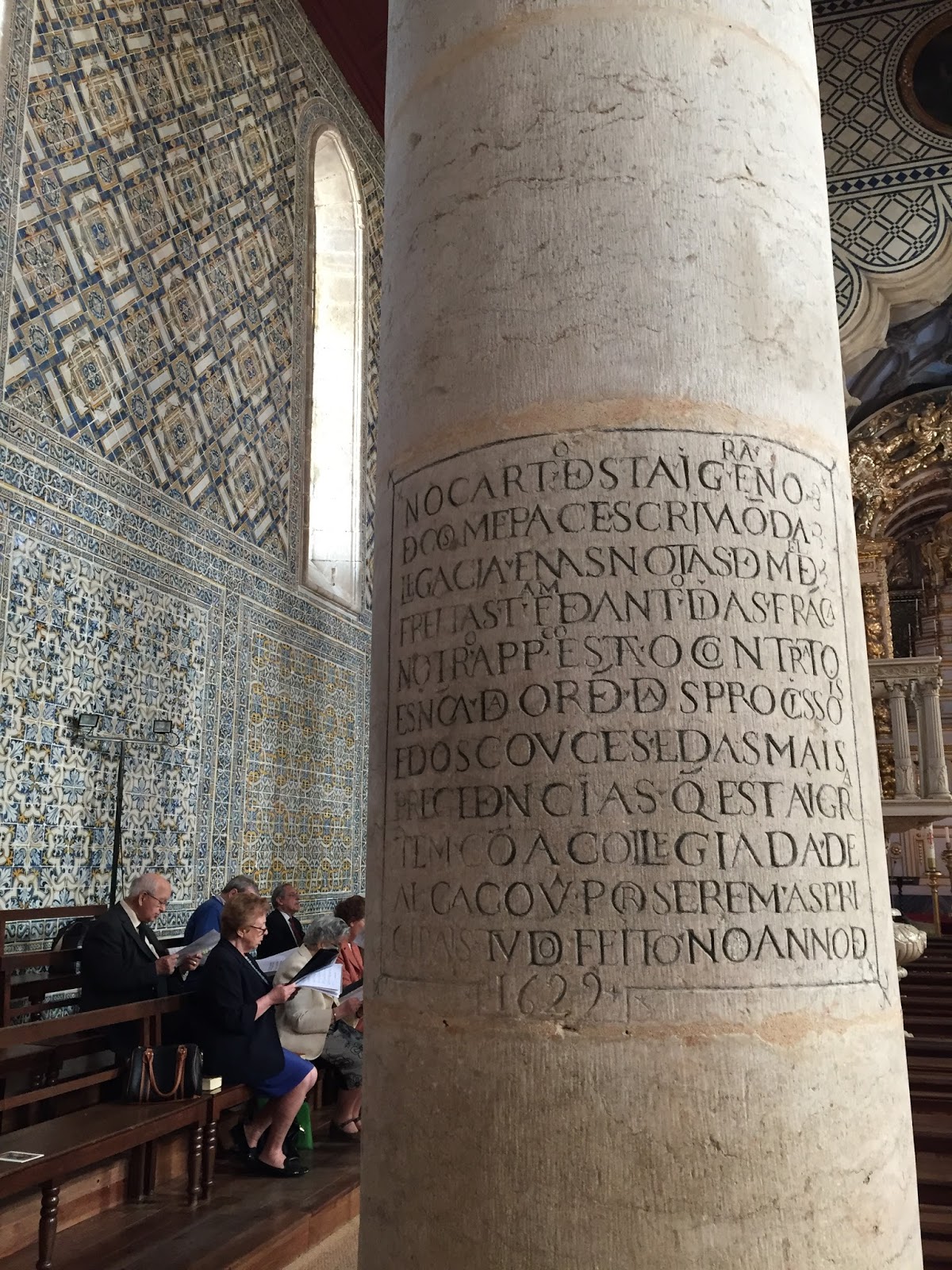
Tomar possui uma trilha histórica impressionante, e, entre tantos sítios importantes, encontra-se a Igreja Santa Maria do Olival, construída no séc. 12 , sede da Ordem dos Cavaleiros Templários, posteriormente, da Ordem de Cristo, quando os Templários foram banidos de Portugal.  
Na época de sua perseguição, muitos de seus símbolos escavados nas pedras foram escondidos; quando os Jesuítas tomaram conta da igreja, os restos mortais dos Templários foram removidos de suas tumbas, com exceção de D.Gualdim Pais.  
As pedras com símbolos templários foram, posteriormente, recolocadas no chão da Igreja.

The Church of Santa Maria do Olival , a 12th- century Gothic Church, built over a former Benedictine Monastery, since the early beginning of the Nation , has contained the spirit of the Order of the Knights Templars. When the Templars were persecuted and casted away , the Church was given to the Order of Christ . When the Jesuits took over it, they removed the remains of the Knights who were buried in the Church , with the exception of D. Gualdim Pais'.
It is still possible to see some scattered symbols from the Templars carved in the stones.


Lápide funerária de D. Gualdim Pais, século XII. "Aqui jaz o irmão Gualdim, Mestre da Ordem dos Templários de Portugal, em 1195 nos idos de Outubro, aqui no Castelo de Tomar, que como muitos outros povoou. Descanse em paz." (tradução adaptada) 


D. Gualdim de Pais Tomb

A Cruz / The Cross


O Cálice / The Grail 


O esquadro/ The Square


Nossa Senhora com as mãos formando uma fechadura
Our Lady forming with her hands a door lock


Lista dos Mestres Templários
Name of the Templars Masters


Torre de defesa
Defense Tower built in the 12th century


segunda-feira, 1 de maio de 2017

Tomar- Portugal

Tomar é a nossa parada seguinte a Santarém. Construída sobre as ruínas da cidade romana Sellium,  situada às margens do rio Nabão, Tomar foi concedida à Ordem dos Cavaleiros Templários em 1159, e, em 1160, o Grão Mestre de Portugal Gualdim Pais iniciou a construção do Castelo e do Monastério, que se tornariam a sede da ordem dos Templários em Portugal. Muito há para se visitar nesta pequena cidade de vinte mil habitantes e de mais de 800 anos Mas se for necessário escolher, a Igreja de Santa Iria, O Castelo dos Templários e a Igreja Santa Maria dos Olivais (objeto da próxima postagem) são os escolhidos.


Former seat of the Order of the Knights Templar, Tomar has a lot to offer to careful eyes. Walking by its streets and you see wonderful constructions in this more than 800 years city. But if you have to choose just a few, three of them ara a must view: Santa Iria Church, the Templar Castle and Santa Maria dos Olivais Church (which is the object of our next post).


Igreja da Santa Iria


Localizada próxima ao  rio Nabão, do início do século XVI, a Igreja de Santa Iria possui um portal e um altar renascentista e foi construída em arquitetura Manuelina.
Located near the Nabão river, Santa Iria Church, fro early 16th century, has a beautiful Renaissance  portal and altar, as well as Manueline architectonic details.


The Templar Castle was built in the 12 century and was at the time the most advanced military stronghold, inspired by the fortifications of the Holy Land.


sexta-feira, 21 de abril de 2017

Santarém - Portugal

Fazendo uma pequena pausa nos posts sobre a Islândia, Nosso Olhar apresenta algumas fotos de Santarém, resultado da visita a Portugal que realizamos na Semana Santa. 
Região habitada desde tempos pré-históricos, a cidade  fundada pelos romanos no segundo século antes de Cristo tem um apelo muito maior para nós, brasileiros, por ser a terra natal de Estácio de Sá e a escolhida de Pedro Álvares Cabral, onde ele se encontra enterrado.


In a really quick trip to Portugal during Easter Holidays, Nosso Olhar visited Santarém, whose foundation is attributed to the Romans in the 2nd century before Christ, with the name Scalabis. Since prehistory, the region has been inhabited, first by the Lusitani, then by Greeks, Romans, Visigoths, Moors and later Portuguese Christians. Legend says that the name Santarém derives from Sancta Irene in honor of the Visigoth Saint Iria (Irene) who was martyred in Tomar (Nabantia) and whose uncorrupted body reached Santarém. It is the land of  Pedro Álvares Cabral , explorer who arrived and discovered Brazil to the Portuguese in 1500. 


Como diz Pero Vaz de Caminha em sua carta, no dia 22 de abril de 1500, foi avistada a Terra de Vera Cruz (Brasil).

Pero Vaz de Caminha wrote a detailed official report of the April 1500 discovery of Brazil by Cabral's fleet.

Estátua de Pedro Álvares Cabral 
statue


Igreja Santa Maria  da Graça , que teve o início de sua construção em 1380, por ordem de D. João Afonso Telo de Meneses e sua esposa D. Guiomar de Villalobos, primeiros condes de Ourém.  Local onde se encontra o túmulo de Pedro Álvares Cabral.

The Church of Santa Maria da Graça is from 1380 , and was built by the order of D. João Afonso Pelo de Meneses and his wife. D. Guitar Villalobos, 1st Earls of Our. It is the resting place of Pedro Álvares Cabral.


Igreja Santa Maria de Marvilla
Church of Santa Maria de Marvilla


 A Igreja Santa Maria de Marvilla localiza-se no centro histórico de Santarém resulta, provavelmente, da refundação de uma mesquita de Medina Islâmica de Santarém , datando do tempo da reconquista cristã da região. Foi doada à Ordem dos Templários  em 1159 por D. Afonso Henriques.


The Church Santa Maria de Marvilla is located in the historical center of Santarém and dates back to the Christian Reconquest. In 1159, it was donated to the Order of Templars by  D. Afonso Henriques. Nowadays, it presents a Manueline style, but its interior houses some characteristics from the time of the Moors.


pia de água benta

Holy Water Fountain


pia batismal 

Baptismal font


segunda-feira, 3 de abril de 2017

Pequeno Gêiser, Águas termais e Quedas d'água /Hot Springs ,Little Geyser and Waterfalls


A Islândia possui mais fontes termais do que qualquer outro país no mundo. Existem dois tipos de áreas termais: campos de alta temperatura e campos de baixa temperatura. A água nessas fontes chega à temperatura de ebulição na superfície e algumas delas são gêiseres. A mais famosa é o Grande Geysir em Haukadalur ao sul do país. Dessa fonte, originou-se o nome dado internacionalmente.

Mais de 75% da população islandesa tem suas casas  abastecidas por essas fontes de águas termais.

No caminho até Haukadalur, podemos observar as geleiras que fazem parte do cenário do país, os famosos cavalos islandeses, de tamanho médio, que têm suas origens nos cavalos trazidos ao país pelos vikings, e a queda d'água Gullfoss , no rio Hivtá, formado pelas águas das geleiras .


Iceland has more hot springs than any other country in the world. The most famous is  The Great Geysir in Haukadalur in South Iceland, from which the international world geyser is derived. The water from hot springs is used in more than 75% of the population enjoys this type of heating in their homes. In the way to the hot springs, we can appreciate the Vatnajökull glacier, the Icelandic horses   whose origin dates back to the settlement of the country in the late 9th century.and the massive Gullfoss waterfall on the Hivitá river.


Vatnajökul Glacier 


Geleira Vatnajökul


Hot Springs / Águas Termais e Gêiseres


sábado, 1 de abril de 2017

Parque Nacional de Þingvellir/ Þingvellir National Park


Em um dia muito frio e chuvoso, fomos visitar o Parque Nacional   Þingvellir a leste de Reykjavik. Situado à beira do lago Þingvallavatnan, o parque é considerado Patrimônio Mundial da Humanidade pela UNESCO e  sagrado para a história da Islândia, pois é o lugar onde o primeiro parlamento da história foi criado em 930 d.C, funcionando até o 1798.A República da Islândia aí foi estabelecida em  17 de junho de 1944.


Além disso,  Þingvellir possui características naturais e geológicas únicas: Almannagjá é um Canyon formado entre duas placas tectônicas, a Americana e Eurasiana,  um deleite para geólogos e amantes dos fenômenos da terra, pois é a visualização da Deriva Continental.


In a very cold and wet day,  we went to visit    Þingvellir (Thingvellir)  National Park in Iceland. And it was totally worth it. It is a historical site and a national park, east of Reykjavik by the lake of Þingvallavatnan  Its importance is at least threefold: It is the site of the oldest existing parliament in the world, first assembled in 930 A.D and it is the place of the  foundation of the Icelandic Republic on the 17th of June 1944. For this reason, it has been designated a UNESCO World Heritage.

Besides, it is also  protected as a national park due to its unique geology and natural features. Almannagjá is a canyon formed by two tectonic plates , a visual representation of continental drift.  


Local da Fundação da República
Place where the Republic was founded


Ao fundo uma Igreja. Acredita-se  ter sido o local da Primeira Igreja Cristã na Islândia no ano 1000, quando por lei, a religião foi adotada.
Place of the first Christian Church settled in the year of 1000 when Christianity by an act of Law was adopted